Sunday, 24 November 2013

NSA Hacked Over 50,000 Networks, Says Report.


According to a recent report by a Dutch media outlet NCR, based on documents leaked by former NSA employee, Edward Snowden, the US NSA hacked thousands of networks worldwide.

The Dutch media revealed that documents provided by Snowden prove that “the American intelligence service --- NSA --- infected more than 50,000 computer networks worldwide with malicious software designed to steal sensitive information”

For the time being, NSA hasn’t responded to this allegation.

Image Source: ZDNet.
Source: CNET.


Saturday, 23 November 2013

Going, Going, Gone!

Here are the latest pics of the demolished market of Umuahia. To read more about it, click: Umuahia Main Market to be Demolished and Latest Gist on Umuahia Main Market Demolition --- Man Dies in a Store.


 #Umuahia.


Friday, 15 November 2013

The Red Baron.

Manfred Von Richthofen by_Chima_Chibueze
Manfred Von Richthofen.


Manfred Von Richthofen_with_Head_Injury by Chima_Chibueze
Manfred Von Richthofen with Head Injury.


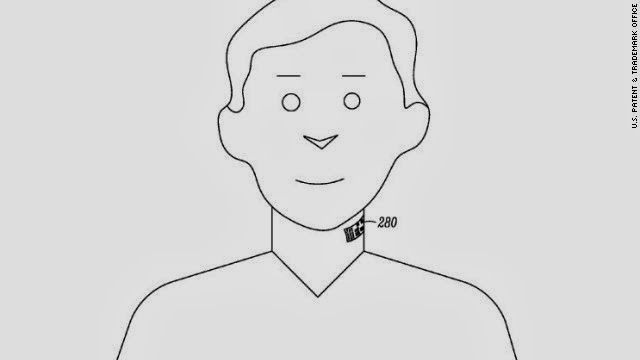
Google Aims To Tag You By The Neck With an Electronic Tattoo.


Google has been dabbling into many things lately. Yesterday, it was Google Glass; today, it is smartwatches and longevity; and tomorrow, it will be an electronic tattoo by the neck.

Google-owned Motorola Mobility has filed for a patent for an electronic tattoo that can be applied to a throat region of the body. The tattoo will have a sub-dermal microphone, which will enable the wearer communicate to someone without having to use his phone directly, and will use a Bluetooth-like connectivity to connect with smartphones, gaming devices, tablets and other wearable devices. It is likely going to be powered, like some other digital tattoos, by electricity converted from glucose and oxygen found in the wearer’s blood.

#Google. #Digital Tattoo.

Source: CNN.


Gene Responsible For Wolverine-Like Self-Healing Ability Discovered.


Ever since I started watching Sci-Fi movies in which some characters were able to regenerate parts of their body, I have been wondering the type of technology that can make a human being, in real life, spontaneously regrow his body parts. Recently, a Harvard scientist believes he has found the particular gene that can do it.

The researcher, George Daley, noticed that a gene known as Lin28a, when activated, helped his lab mice grow back their ears and toes, which had been clipped, in a few days. As you may know, stem cells are responsible for formation of tissues and organs but as an individual gets older, what these cells do is merely repair the body but don’t usually regenerate any organ. However, Daley says that the human body can be tricked into thinking it’s younger than it is by, in combination with a certain metabolism, activating the Lin28a gene; thereby triggering the regeneration of any lost body part.

#LIN28a.

Source: Gizmodo UK.


Thursday, 14 November 2013

Solar-Activated Nanogrid Turns Oil Spills into Biodegradable Compounds.

Oil Spill
Photo by Svdmolen.
A new way to tackle oil spills that is easier and more eco-friendly than conventional methods has been developed by a professor from State University of New York at Stony Brook.


Nanogrid

Prof. Perena Gauma invented a “nanogrid”, made of copper-tungsten oxide, that when activated by sunlight can break down oil from spills, and leave behind only biodegradable compounds in the contaminated water. The nanogridis in form of a fishing net, this is to provide “maximum exposure to the contaminant to be remedied, while the nanoscale particle sizes enable fast catalystic action”. The net is produced by a self-assembly process in which hot metal clusters diffuse inside polymeric nanofibres and turn into single crystal nanowires, then oxidize to form metal oxide—ceramic—nanoparticles.

#Nanotechnology. #Oil Spill.

Source: Phys.org.


Tuesday, 12 November 2013

iPhone Converted to Cheap Digital Microscope.


An Instructables user, Yoshinok, has come up with a means of converting an iPhone into a powerful microscope using a wooden board, a pair of Plexiglas slides, a laser pointer and a few nuts and bolts.

The makeshift microscope can give magnifications as high as 175x. It is a stand with Plexiglas slides on which the iPhone is placed to view a specimen that is on the second Plexiglas. Yoshinok detailed the steps of making the microscope stand on Instructables website. He believes the “microscope” will provide a cheaper means of studying microscopic structures in schools that cannot afford standard digital microscope, since smartphones are common among students and the stand doesn't cost much to construct.

Source: TechBeat.

#Instructables. #iPhone. #Microscope.


Test Blog. All rights reserved. © Maira Gall.